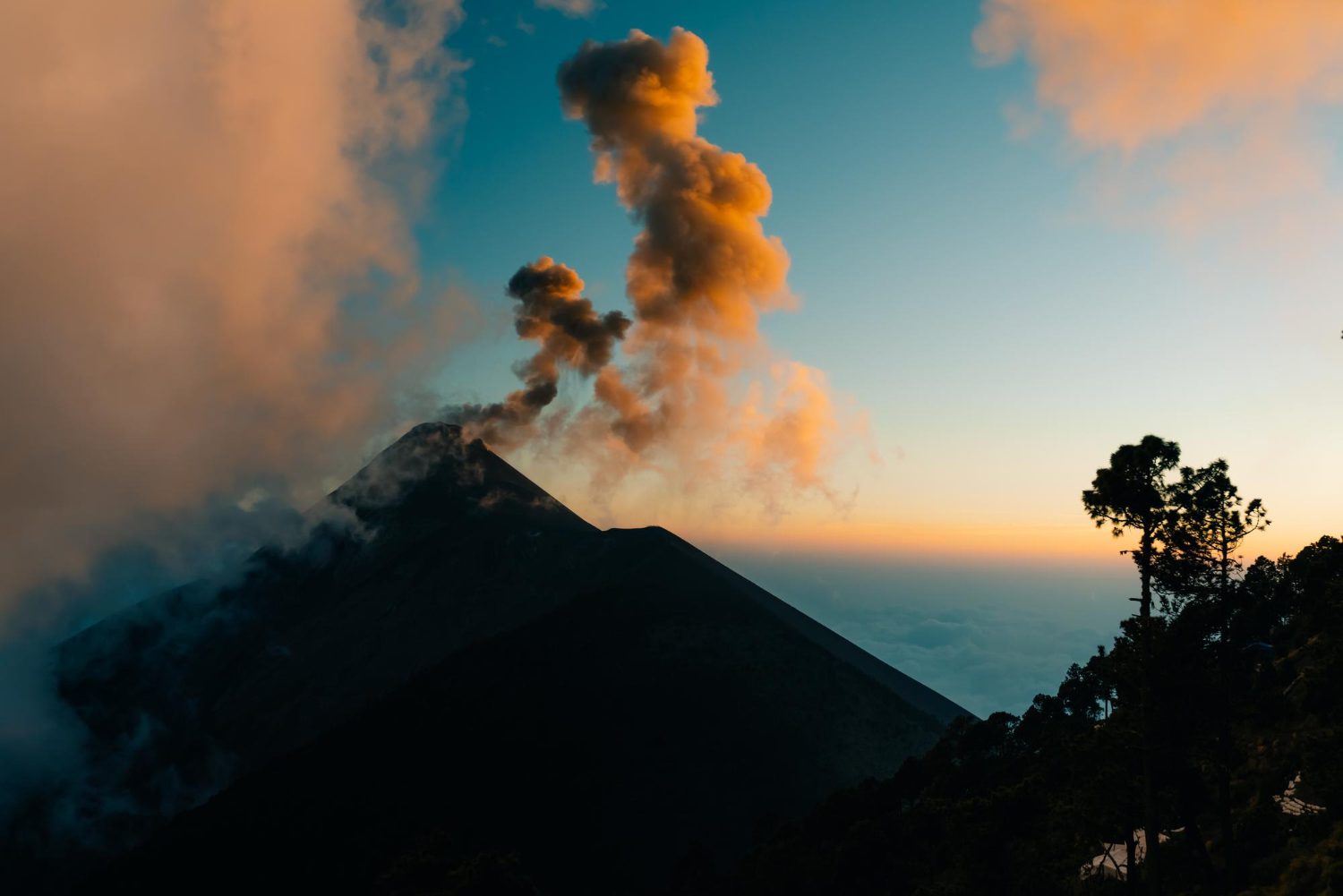
There are certain activities and trips within Central America that are a bit of a rite of passage for backpackers and travellers – the Acatenango hike in Guatemala is one of these. Having said that, the first time I visited Guatemala I was on such a tight budget that I wasn’t able to do it, so it was only fitting that I headed back a second time to have this amazing experience.
It’s a steep hike, usually involving an overnight trek up Acatenango volcano to a base camp with a front-row view of Volcán de Fuego, one of Central America’s most active volcanoes, which erupts every 15 to 30 minutes or so.
Hiking Acatenango is undoubtedly a much nicer experience if you’re prepared and I’m sure you’ve got some questions, so in this guide I’ll cover how hard the Acatenango hike is, the altitude, how long it takes, what it costs, what to pack and which tour to book, plus my own experience hiking Acatenango in October.


Acatenango hike at a glance
| Summit | 3,976m (about 13,000ft) |
| Trailhead | about 2,400m |
| Base camp | about 3,600–3,750m, depending on the tour |
| Fuego | 3,763m |
| Time up to base camp | 4–6 hours |
| Total hiking | roughly 10–12 hours |
| Cost | about $84–$250 for an overnight tour |
| Best time | November to April |
Is the Acatenango hike worth it?
My quick answer – absolutely! It’s a hard hike, but even on days with less visibility you’ll get a huge sense of achievement.
Acatenango itself is dormant, and it’s Fuego next door that erupts. Fuego has been erupting almost continuously since 2002, and from base camp you can watch lava arcing into the sky and hear the booms seconds later. A once in a lifetime experience.

How hard is the Acatenango hike?
The Acatenango hike difficulty comes from its steepness and altitude, rather than the technical skill. It climbs through farmland, then cloud forest, then loose volcanic scree. You gain roughly 1,200–1,350m from the trailhead to base camp, so it’s a tough day even for fit walkers.
I was in a group with other hikers that I didn’t know and even within the first few minutes there were people in the group that were really struggling. By the time we got to the first rest stop, which was really only a few hundred metres into the hike, some of the group were a long way behind.
Eventually our larger group split into two smaller groups as it was becoming difficult to find a pace that worked for everyone. I found it slightly harder than I expected although I did ease into it as the hike went on.
What was particularly surprising however was how much my legs ached the day after the hike. Going down stairs was really difficult for a couple of days (for me and all of the group I hiked with) and I actually ended up icing my knees to help.


Acatenango altitude and elevation
- Summit: 3,976m
- Base camp: about 3,600–3,750m
- Antigua, where most hikers start: about 1,500m
A couple of people in my group said they could very much feel the altitude. Altitude can of course cause headaches, nausea and dizziness. Go slowly, drink plenty of water, tell your guide if you feel unwell.
It’s possible to buy altitude sickness tablets in Antigua over the counter without a prescription, but most people don’t need them given you won’t be spending that much time too high.
Acatenango overnight hike: what to expect hour by hour
- Morning: pick-up from Antigua, around 8/9am for most tours, then an hour to drive to the start of the hike.
- The climb: about 4–6 hours up with a few stops on the way.
- Base camp: sunset, dinner and the first eruptions.
- Night: Fuego eruptions, campfire drinks and an early night ready for an early start
- 4am / Sunrise: the optional summit push of 1–2 hours.
- Descent: about 2–3 hours, back in Antigua early to mid-afternoon.


Acatenango day hike or overnight?
Most people do it overnight, because the main attraction is watching Fuego erupt after dark or equally the early morning start to watch the eruptions at sunrise! Also, as I’ve already mentioned it is quite a challenging hike, so unless you’re particularly fit and used to steep and difficult climbs then doing it all in one day is quite a lot!
Some people ask about an Acatenango day hike, and some operators do offer this, but it is best to check with the on the ground operators in Antigua and do remember you’d miss the night-time eruptions which are epic to see!
I did chat to a group of 3 guys with a guide who were planning on going up and down in one day without staying overnight. They were really having to rush up the volcano and gave the impression they wished they had more time.


Best time to hike Acatenango
It is possible to do the Acatenango hike all year round and in general operators do offer the trip every month of the year.
The dry season, (approx November to April), gives clearer views of Fuego, but December and January bring near-freezing nights (0–5°C) at camp and many people are shocked by the drop in temperatures whilst camping.
The rainy season means clouds can hide the volcano, plus slippy trails and of course the added sometimes unpleasant heavy rain whilst hiking. Wet clothes are no fun, so if you are planning on hiking Acatenango on a rainy day then make sure to bring spare socks in a waterproof bag.
I did the Acatenango hike in October and the visibility was not great at all. I think we were particularly unlucky but the guides did say that it is one of the worst times view wise.

How much does the Acatenango hike cost?
An Acatenango overnight hike and camping tour generally costs around $85–$250 per person, plus a park fee of about Q100 for foreign visitors. Extras like porter tips and gear hire can also add to that.
Prices vary so much because of the varying offerings.
Which Acatenango hike tour should you book?
There are a lot of companies you can do the hike with and you’ll find many offering tours in Antigua as you’re walking around. Things to compare: group size, gear quality, guides, food, campsite offerings and cancellation policy.
I went with Old Town Outfitters who offer varying prices depending on how many people are in the group. They include English speaking guides, smaller groups, breakfast, lunch and dinner, tents with sleeping bags and equipment hire if needed.
You can book the tour I took here – which is currently the best reviewed Acatenango hike on Viator.
Book the Old Town Outfitters hike here.

What to wear for the Acatenango volcano hike
Choosing what to wear for the Acatenango hike is really important and can make the difference between having one of the best experiences you’ll ever have vs an uncomfortable and possibly dangerous hike.
- Walking boots – You’ll need to wear hiking boots, preferably waterproof and definitely ones that are worn in. Some people also did the hike in sturdy trainers.
- Base layer – The weather and temperature changes so frequently during the hike so you’ll want to wear a vest or thin top as the base layer as when the sun is out it can be quite hot.
- Mid layer – A fleece or hoodie
- Cap & Beanie hat – I brought a cap with me for during the day and then a beanie to wear at night
- Warm layer – Insulated puffer jacket or down jacket
- Waterproof jacket – A proper waterproof layer
- Poncho – Even if it’s one of the cheap ponchos you can buy around Antigua or at the start of the hike, this is super helpful as it covers both you and your backpack.


What to pack for the Acatenango hike
- Warm layers: thermal base layer, fleece and insulated jacket, plus a hat and gloves
- Rain layers – Waterproof jacket & poncho
- Hiking boots – Worn in – I love my boots from Scarpa that have lasted years.
- Headtorch – Easy to hire from operators if you don’t have one
- Water bottle – You’ll want at least 2l of water with you
- Snacks – Easy to carry snacks like cereal bars
- Toilet paper – A pack of tissues or a roll would suffice
- Some cash – Bring a few small notes in local currency
- Power bank – There of course won’t be anywhere to charge items on the hike
- Any medications you might need
- Camera – an action cam like the DJI Action 5 is best
- Spare socks
- Spare camera batteries – since cold drains them fast
- Toiletries – Toothbrush & toothpaste and suncream will suffice
- Hiking poles – Hire these if you don’t own them, they make the hike a lot easier
- Backpack – Pack a day bag that has a waist strap for easier carrying and side pockets for easy access if possible.
Most tours include tents & sleeping bags, but do check what’s included.
Is the Acatenango hike safe?
In general, definitely yes! Hiking Volcán de Fuego itself has been banned since April 2026 due to instances of debris and eruptions hitting tourists, however neighbouring Acatenango hasn’t erupted since 1972.
One woman on the same trip did break her foot during the hike but hopefully wearing the appropriate shoes can help prevent this. Equally, at the top of the volcano at the campsite I was very cold. I thought I’d brought enough clothes, but as my backpack ended up getting wet then some of my spare dry clothes also got wet. It’s quite easy to get too cold but once again, being prepared can help with this.


Acatenango hike FAQs
- How high is Acatenango? The summit is 3,976m (about 13,000ft). Base camp is around 3,600 to 3,750m.
- How long does the hike take? Allow roughly 4 to 6 hours up to base camp and 2 to 3 hours down, plus 1 to 2 hours if you do the sunrise summit.
- Is Acatenango active? No, Acatenango is dormant. It’s neighbouring Fuego that erupts, often every 15 to 30 minutes.
- How cold does it get? Near freezing at camp in December and January (0 to 5°C). It feels much colder if your clothes get wet.
- Do you need to be fit? Yes. It’s steep and high. Some of my group struggled from the first few minutes, and my legs ached for days afterwards.
- Can you see Fuego erupt? Often, in clear weather. When I went in October, visibility wasn’t great, because clouds can hide the volcano.
Final thoughts on the Acatenango hike
Hiking Acatenango was one of the highlights of my recent trip to Guatemala and I’ve heard so many people say the same. Even if visiblity is bad, you won’t regret doing it.
Make sure to pack properly and wear appropriate clothing and it’s bound to be a memorable trip.
